
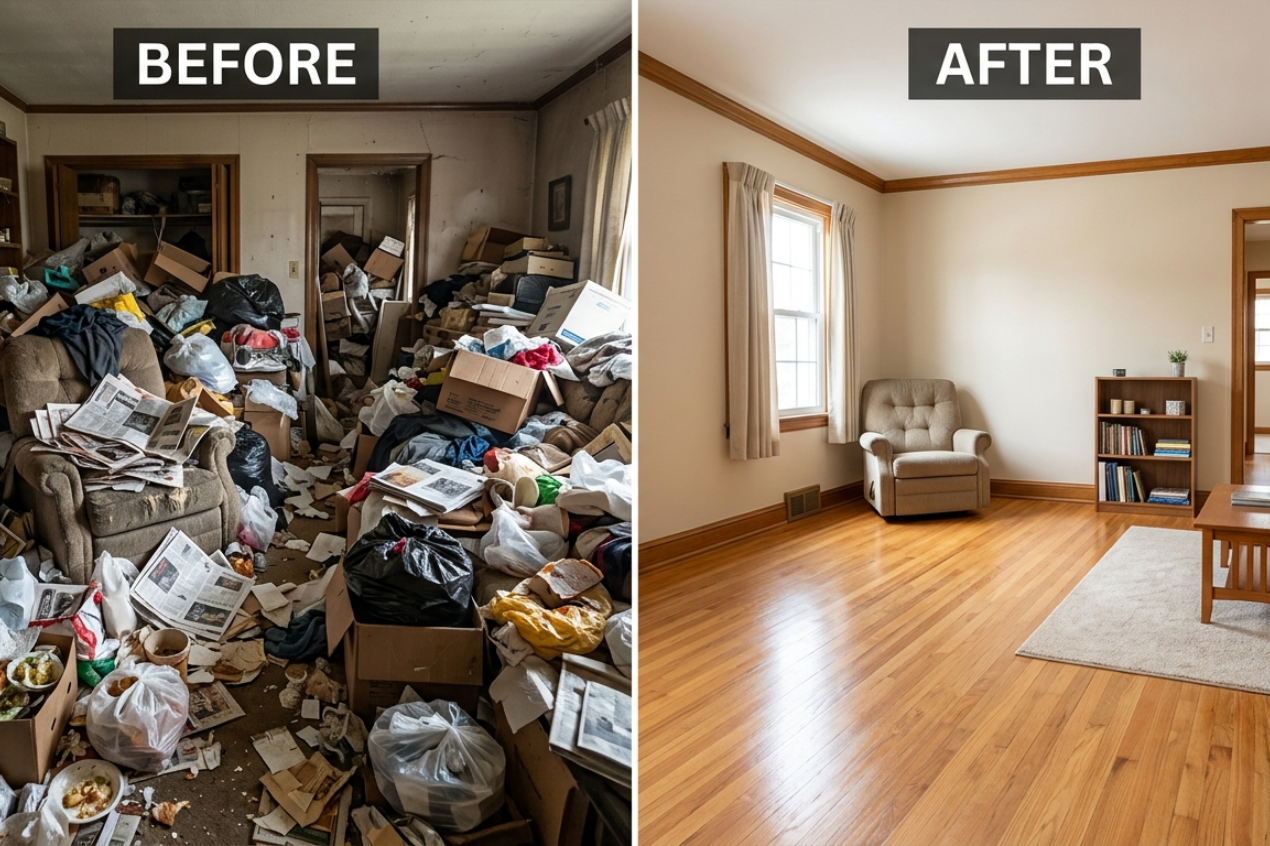
Local planning helps Berkeley hoarding cleanups run smoothly.
Why Berkeley Homes Need Local Cleanup Planning
Preparing a Berkeley home for hoarding cleanup requires more than sorting personal belongings. Parking, building access, and disposal plans can affect the entire cleanup schedule. Therefore, families should discuss local conditions before confirming the first service date.
Berkeley includes apartments, older houses, and hillside homes with very different access. Some properties have shared entrances while others have steep stairs or narrow driveways. As a result, the cleanup plan should match the property and surrounding block.
Early hoarding cleanup preparation prevents avoidable delays when workers begin moving supplies. The team needs enough space for equipment and approved hauling vehicles nearby. However, residents should never block sidewalks or reserve public spaces without proper approval.
Schedule a Property Assessment Before Cleanup Day
A detailed assessment helps the company understand access concerns before professional hoarding cleanup. Show every affected room and explain which areas require the most urgent attention. Therefore, the estimate can more accurately reflect actual labor and hauling needs.
Mention stairs, elevators and gates that may slow movement through the property. Also, identify weak floors or damaged areas without entering an unsafe space. The team can then plan safer routes and suitable equipment for the work.
Arrange Parking for Cleanup Vehicles
Parking can become a major local challenge during Berkeley hoarding cleanup projects. Cleanup teams may need nearby space for service vehicles and approved hauling equipment. Therefore, confirm vehicle sizes and parking needs during the initial property assessment.
Berkeley requires approval for temporary No Parking signs used for certain vehicles. These signs may support a moving truck, moving container or debris box. If approved, the signs must appear at least seventy two hours beforehand.
Do not assume an open curb space will remain available on cleanup morning. Check posted limits, street sweeping times and temporary restrictions near the property. Also, tell the company about meters or residential parking limits on your block.
Review Access Through the Building
Multiunit buildings may require approval from landlords or property managers before large cleanups. Ask about loading areas, service entrances and elevator rules well before scheduling. Consequently, the team can follow building procedures without disturbing other nearby residents.
Measure tight doorways or stair turns when large furniture may require removal. However, never climb over clutter merely to collect measurements for the company. Instead, describe the concern and let trained workers inspect difficult areas safely.
Share entry codes and gate instructions only through the company’s approved process. Confirm who will unlock the property and remain available during onsite arrival. Therefore, the team can begin promptly without waiting outside a secured building.
Consider Your Berkeley Neighborhood
Access conditions can change across Downtown Berkeley, Elmwood and North Berkeley neighborhoods. Busy streets may offer very limited loading space during popular travel periods. Meanwhile, hillside properties may require added planning for slopes and longer carrying routes.
Homes near Telegraph Avenue may also experience frequent pedestrian and vehicle activity. Schedule arrival times with these local conditions and the property rules in mind. However, never promise neighbors an exact completion time before the assessment occurs.
Tell the company about schools, construction or planned events near your block. These details may affect parking and hauling access during the chosen service window. As a result, the team can adjust arrival plans before vehicles reach the property.
Keep Entrances and Shared Areas Available
Avoid filling halls or shared walkways with bags before cleanup professionals arrive. Loose items can create added barriers for residents and the cleanup team. Therefore, leave building exits and common routes as open as conditions allow.
Do not move unstable piles when you cannot see what rests underneath them. Hidden glass, needles or damaged materials may create serious handling risks for residents. Instead, tell the team where unstable piles or unknown items remain located.
If one safe entrance remains available then protect that route from new clutter. Ask household members to keep shoes and personal items away from the doorway. Consequently, workers can bring supplies inside without creating another dangerous access barrier.
Understand Berkeley Disposal Options
The Berkeley Transfer Station accepts many materials but follows specific operating rules. Customers must arrive inside a vehicle because the facility prohibits pedestrian drop offs. In addition, every transported load needs secure covering to prevent items from spilling.
The station may direct certain materials toward recycling or special handling areas. Carpet, electronics and treated wood can require separate preparation or added processing. Therefore, the cleanup company should plan loads based on each material type.
Normal curbside carts cannot hold large amounts from a major cleanup project. Berkeley offers prepaid bags, extra pickups and temporary dumpsters for certain properties. However, eligibility and placement rules should receive confirmation before anyone relies on them.
Separate Hazardous Materials From Regular Waste
Hazardous products should never enter ordinary trash or remain loose near the curb. Paint, chemicals and some batteries require approved disposal through separate local programs. Therefore, tell the cleanup team when these materials may exist inside the home.
The Berkeley Transfer Station does not accept most general household hazardous waste. Alameda County provides separate facilities for qualifying household materials and local residents. However, landlords and businesses must follow different program rules for hazardous waste.
Never mix unknown liquids or open damaged containers during your own preparation. Also, avoid handling needles or unsafe medical waste without proper tools and training. The company can explain whether specialized support is necessary before cleanup continues.
What to Share With the Cleanup Company
Provide the full address and the best entrance before the service date. Include parking limits, gate instructions, and the number of interior stair levels. Also, mention elevators or long pathways between the home and loading area.
Describe known hazards without touching or moving them during your own inspection. Mention pests, animal waste, and damaged flooring when you know they exist. Therefore, the company can determine which equipment and trained support may become necessary.
Share important deadlines related to inspections, repairs, or a planned property sale. Still, allow enough time for safe decisions and unexpected conditions during cleanup. A rushed schedule can create pressure and prevent careful sorting of important belongings.
Confirm the Final Plan Before Cleanup Day
Review the service scope, access plan, and decision process with the company. Confirm arrival time and identify the person who will meet the team. Therefore, everyone understands their responsibilities before the scheduled on-site hoarding cleanup appointment begins.
Ask how the company handles sorting, hauling, and cleaning after removing clutter. Our guide explaining how professional hoarding cleanup works provides more detail about the full process. However, your written scope should control the work planned for this property.
If you still need an assessment, then review hoarding cleanup services in Berkeley before requesting help. Share property photos only through a secure method approved by the company. Then ask for a plan based on access and current property conditions.
Frequently Asked Questions
Do I Need a Temporary Parking Permit for Cleanup Vehicles?
You may need City approval when reserving curb space for certain vehicles. Berkeley specifically addresses temporary signs for trucks, containers and large debris boxes. Therefore, confirm the vehicle plan early and follow current official City instructions.
Can We Use Regular Curbside Carts for Removed Items?
Regular carts may not hold the amount removed during a hoarding project. Berkeley offers other options but property eligibility and material rules can vary. Therefore, coordinate the disposal plan before placing bags or bulky items outside.
Where Can Hazardous Household Products Go?
Hazardous products cannot enter regular trash loads or the Berkeley Transfer Station. Alameda County operates separate programs for qualifying residents and accepted household materials. However, landlords and businesses must use the program designed for their status.
Should I Sort Everything Before the Cleanup Team Arrives?
No, complete sorting can create stress and expose hidden hazards within unstable piles. Identify priority items and safe areas without disturbing material you cannot assess. Then let the professional team carefully follow the agreed sorting process inside.
Can I Stay Home During the Cleanup?
That decision depends on hazards, space and your role during important choices. Some Berkeley homeowners remain available while staying away from active work areas. Therefore, discuss the safest and most practical arrangement during the property assessment.
Conclusion
Preparing for hoarding cleanup in Berkeley requires careful planning around local property conditions. Confirm parking, entrances and building rules before choosing the final professional service date. Also, report access limits and known hazards during the first property assessment. Plan disposal routes before workers begin removing unwanted items from the Berkeley home. Hazardous materials require separate handling through approved programs and properly trained support. Casa Azul Janitorial & Hoarding Services can create a suitable local cleanup plan. Therefore, early preparation can reduce delays while protecting privacy throughout the project. Contact the team today to discuss your property and request professional guidance.